Tech
The Science of Muscle Lengthening: Why Longer Muscles Mean Less Pain
Chronic pain almost always traces back to muscles that are too short, too tight, or out of balance. Here's the science behind why lengthening them produces lasting relief.
Why Muscles Shorten in the First Place
Your muscles are adaptive tissue. They respond to how you use them — or don't use them — by changing their resting length. When a muscle is held in a shortened position repeatedly (sitting, hunching, favoring one side), the individual muscle fibers and the surrounding fascia gradually adapt to that shorter length.
This adaptation is a survival mechanism. Your body assumes that if you're spending most of your time in a certain position, that position must be important, so it makes the muscles more efficient at holding it. The problem is that efficiency at a shortened length comes at a cost: reduced range of motion, increased joint compression, altered movement patterns, and eventually, pain.
The process is gradual. You don't notice it happening until one day you can't touch your toes, or your shoulder won't rotate fully, or your lower back aches every time you stand up from a chair.
The Fascia Factor
Muscle shortening doesn't happen in isolation. The fascia — a continuous web of connective tissue that surrounds and connects every muscle, organ, and structure in your body — plays a critical role.
When a muscle shortens, the fascia surrounding it dehydrates and becomes denser, essentially gluing the muscle in its shortened position. This is why static stretching often fails to produce lasting change. You can temporarily elongate the muscle fibers, but the fascial restrictions pull them back to the shortened position within minutes or hours.
Effective muscle lengthening requires enough sustained pressure to affect both the muscle fibers and the surrounding fascia. This is precisely what the RX2600 delivers. The combination of 30 pounds of controlled pressure, therapeutic heat (which rehydrates and softens fascia), and vibration (which overcomes the nervous system's resistance to deep pressure) addresses the tissue at every level simultaneously.
The Length-Tension Relationship
There's a fundamental principle in biomechanics called the length-tension relationship. It states that a muscle generates its maximum force when it's at its optimal resting length — not too short, not too stretched. When a muscle is chronically shortened, it operates in a suboptimal position on the length-tension curve. It generates less force, fatigues faster, and requires more neurological input to produce the same movement.
This is why chronic tightness doesn't just cause pain — it causes weakness. Your shortened hip flexors aren't just tight. They're weak. Your rounded shoulders aren't just stiff. The muscles holding that position are working harder than they should be while producing less force than they could.
Muscle lengthening restores the tissue to its optimal position on the length-tension curve. The result is muscles that are simultaneously more flexible and more powerful. This is why athletes who undergo robotic therapy often report improved performance alongside reduced pain.
Structural Change vs. Temporary Relief
The critical distinction between muscle lengthening and most other pain treatments is the durability of the change. Massage increases circulation and temporarily relaxes muscle tone. Stretching temporarily elongates fibers. Injections temporarily block pain signals. All of these have value, but none of them change the structural length of the muscle tissue.
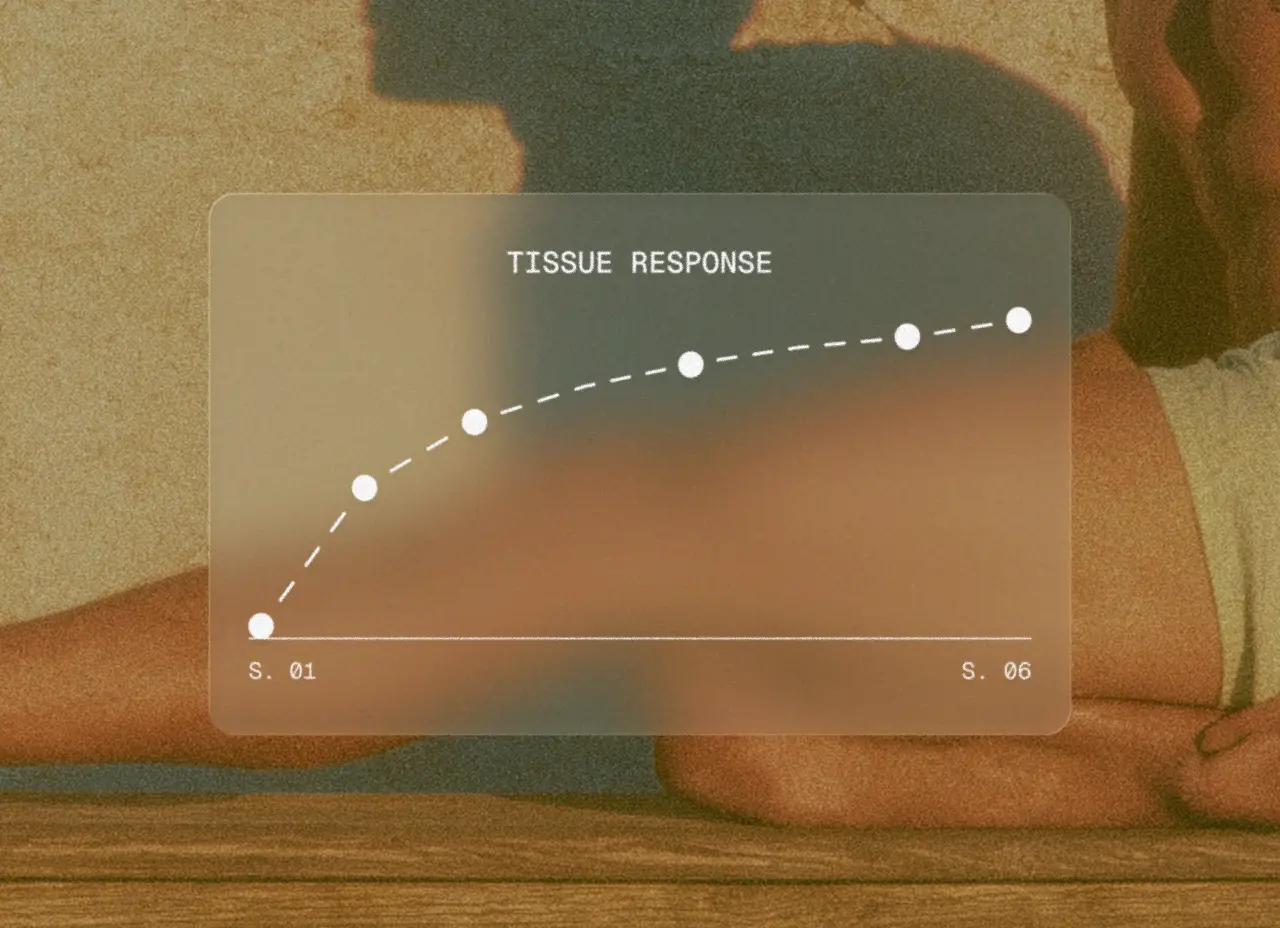
The RobotRx Robotic Therapy sustained pressure produces what's called plastic deformation — a permanent change in the tissue's resting length, as opposed to elastic deformation (a temporary change that reverses when the force is removed). Each session produces incremental plastic deformation, which is why results compound over a treatment plan rather than fading between visits.
This is the fundamental difference patients notice. After manual therapy, you feel better for a day or two. After robotic therapy, you measurably are better and the measurements hold.