Tech
Robotic Therapy vs. Traditional Physical Therapy: What's the Difference?
Traditional PT and robotic therapy both aim to reduce pain and restore function. But the approach, precision, and measurability are fundamentally different. Here's an honest comparison.
Traditional PT: What It Does Well
Traditional physical therapy is the foundation of musculoskeletal rehabilitation, and it deserves credit for what it does well. A skilled PT can evaluate movement patterns, prescribe therapeutic exercises, perform manual therapy techniques, and guide patients through progressive loading programs. For post-surgical rehabilitation, neurological conditions, and exercise-based recovery, traditional PT is often indispensable.
The strength of traditional PT lies in its breadth. It addresses the full spectrum of rehabilitation: strength, coordination, proprioception, functional movement, and patient education. A good PT teaches you how to move better, not just feel better.
Where Traditional PT Falls Short
The limitations of traditional PT aren't about the practitioners — they're about the tools. Manual therapy techniques rely on human hands, which fatigue, vary in pressure from session to session, and can't sustain the force or duration needed to produce structural change in deep muscle tissue.
A therapist applying manual pressure can typically sustain 10 to 15 pounds for a few seconds before fatigue or repositioning. The RX2600 applies up to 30 pounds for sustained 21-second intervals, every time, without variation. That consistency gap is the difference between temporary relief and structural change.
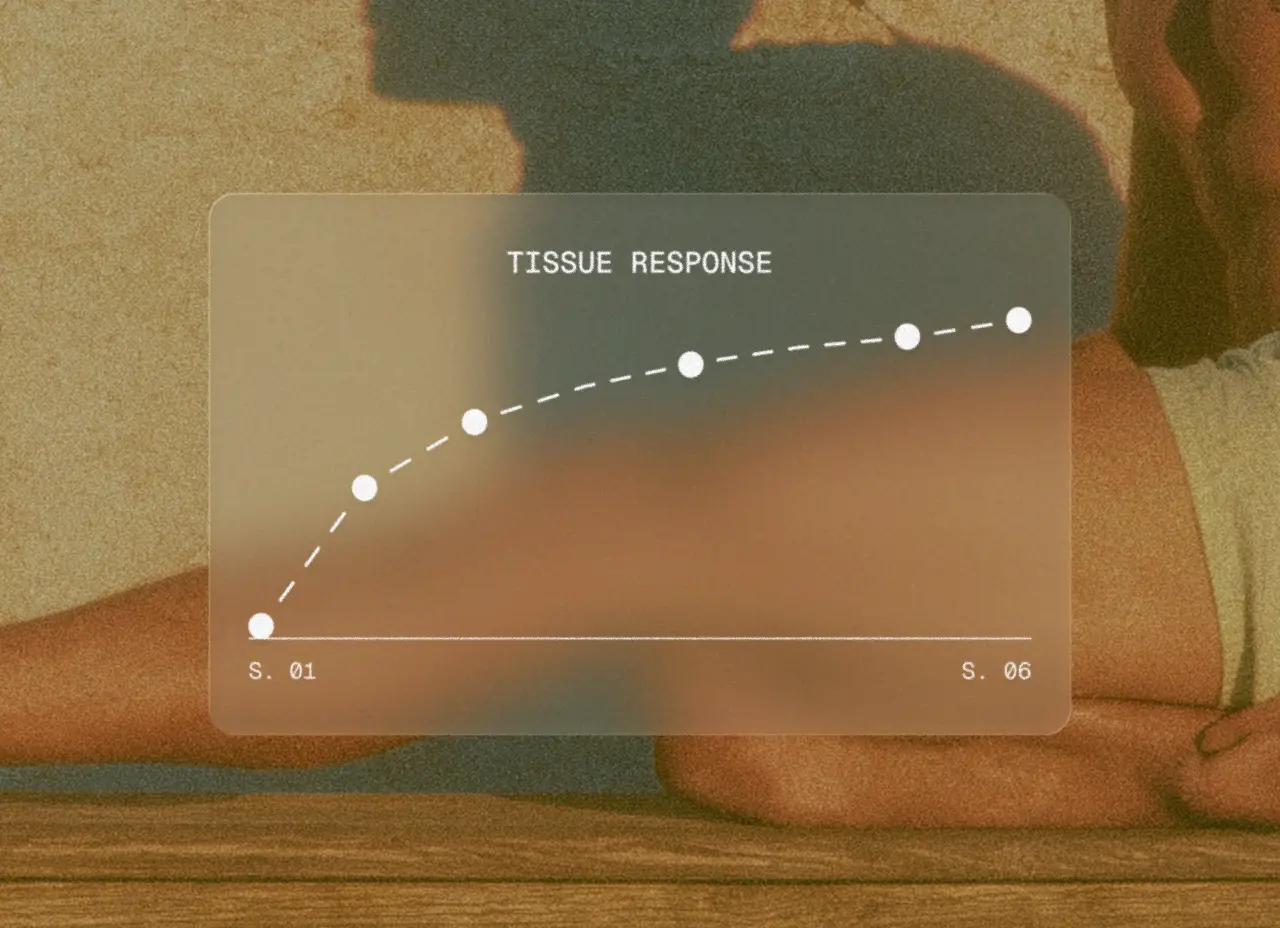
The other limitation is measurement. Traditional PT relies heavily on subjective assessments: pain scales, patient-reported function, and visual observation of movement quality. These are valuable but imprecise. Progress can be hard to quantify, which makes it difficult for both the therapist and the patient to know when the treatment is actually working versus when it just feels like it might be.
What Robotic Therapy Adds
Robotic therapy doesn't replace everything traditional PT does. It replaces the part that traditional PT does least effectively: deep, sustained, measurable pressure therapy for muscle lengthening.
The RX2600 adds three capabilities that manual therapy can't match. First, calibrated consistency: the exact same pressure, duration, and targeting every session, regardless of how many patients the therapist has seen that day. Second, sustained intensity: 21-second holds at up to 30 pounds that physically lengthen shortened muscle tissue, not just temporarily relax it. Third, objective measurement: grip strength, range of motion, and mobility markers tracked with standardized instruments at every visit.
This combination — consistency, intensity, and measurability — is why patients who have plateaued in traditional PT often see breakthroughs with robotic therapy. It's not that their previous PT was bad. It's that the tools available couldn't reach the level of structural change their condition required.
When to Choose Which
Robotic therapy and traditional PT aren't mutually exclusive, and framing them as competitors misses the point. For many patients, the ideal approach combines elements of both.
Choose traditional PT when your primary needs are exercise prescription, movement retraining, post-surgical protocols with progressive loading, or neurological rehabilitation. Choose robotic therapy when your primary issue is chronic pain driven by shortened muscles, when you've plateaued in traditional PT, when you want measurable data tracking your progress, or when you need the consistency and intensity that manual therapy can't deliver.
Many of our patients continue seeing a traditional PT for exercise programming while coming to RobotRx for the targeted muscle lengthening work that requires the RX2600's capabilities. The two approaches complement each other well.