Recovery
Recovery After Surgery: How Robotic Therapy Accelerates Rehabilitation
Post-surgical recovery often stalls once initial healing is complete. Here's how the RX2600 helps patients push past plateaus and restore full range of motion after surgery.
The Post-Surgical Plateau
Surgery is often presented as a fix: you go in, the surgeon repairs the damage, and then rehabilitation gradually returns you to full function. For many patients, that's exactly how it works — up to a point.
The plateau is the point where initial healing is complete, acute pain has subsided, and basic function has returned, but full range of motion remains elusive. You can lift your arm, but not overhead. You can walk, but your gait isn't right. You can grip, but not with full strength. Your surgeon says the surgery was successful. Your PT says you're progressing well. But you know your body isn't back to where it was.
This plateau occurs because surgery addresses the structural damage — the torn labrum, the ruptured ACL, the herniated disc — but it doesn't address the surrounding muscle tissue that shortened and tightened during the injury and recovery period. Those muscles adapted to protect the injured area, and they often don't release on their own.
Why Traditional Rehab Stalls
Traditional post-surgical rehabilitation follows a well-established progression: protect the surgical site, restore basic movement, strengthen the surrounding muscles, and return to function. This protocol works well for the first 70 to 80 percent of recovery.
The final 20 to 30 percent is where it gets difficult. The muscles that shortened during the protection phase resist lengthening. Manual therapy can temporarily improve range of motion, but the gains often don't hold between sessions. Exercise-based rehab strengthens muscles in their current (shortened) state rather than restoring them to their optimal length first.
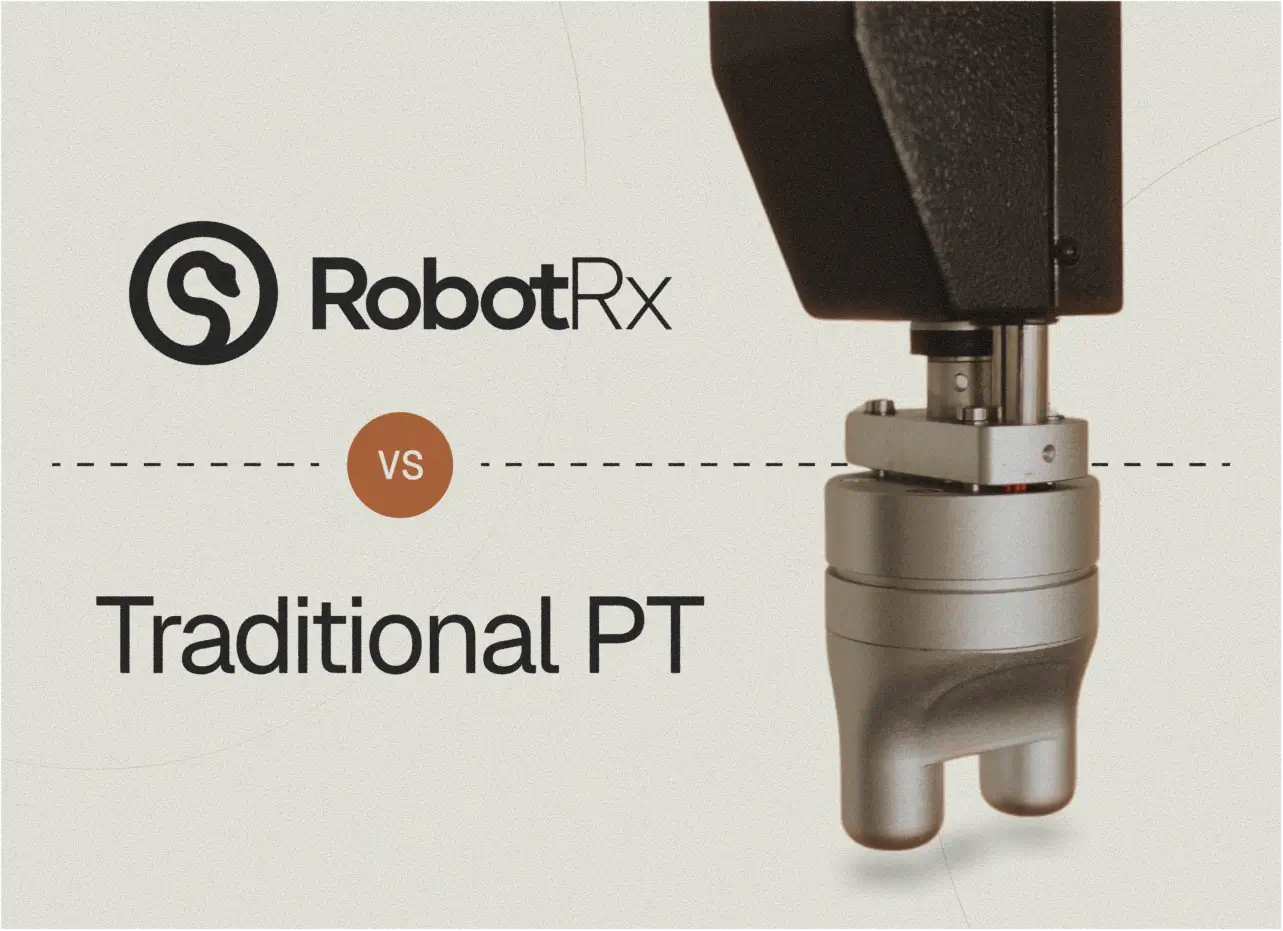
This is the gap that robotic therapy fills. The RX2600's sustained, calibrated pressure can lengthen post-surgical muscle tissue that has been resistant to manual techniques, restoring the structural length needed for full range of motion.
Common Post-Surgical Conditions We Treat
Patients come to RobotRx after a wide range of surgeries, but the most common include rotator cuff repair, where shoulder muscles shorten during the immobilization period and resist full overhead reach. ACL reconstruction, where the hamstrings, quadriceps, and hip flexors shorten during the non-weight-bearing recovery phase. Lumbar discectomy or fusion, where the spinal erectors and hip flexors tighten around the surgical site. And total joint replacements, where the muscles surrounding the new joint need to be lengthened to achieve full range of motion.
In each case, the pattern is the same: the surgery fixed the primary problem, but the surrounding muscles need structural lengthening to complete the recovery.
Timing and Coordination with Your Surgical Team
Robotic therapy is most effective after the initial healing phase is complete and your surgeon has cleared you for manual therapy or soft tissue work. For most surgeries, this is typically six to twelve weeks post-op, though the timeline varies by procedure.
We coordinate with your surgical team and any existing rehabilitation providers. Many of our post-surgical patients continue their exercise-based rehab with a traditional PT while adding robotic therapy sessions to address the muscle lengthening component specifically.
If you're considering robotic therapy after surgery, the best first step is to request a booking and come in for an assessment. We'll measure where you are, identify which muscles are restricting your recovery, and determine whether the RX2600 is appropriate for your current stage of healing. Your therapist will also communicate with your surgeon if needed to ensure everyone is aligned on the treatment plan.