Tech
How the RX2600 Treats Pain at the Source
Most treatments focus on where it hurts. The RX2600 focuses on what's causing the pain. Here's how an FDA-registered robotic system targets the structural root of chronic pain.
The Problem with Treating Where It Hurts
When your lower back aches, you want someone to work on your lower back. That's intuitive. But in the majority of chronic pain cases, the location of the pain and the location of the problem are not the same.
Referred pain is one of the most misunderstood concepts in musculoskeletal health. A shortened piriformis muscle in your hip can send shooting pain down your entire leg. Tight pectoral muscles can cause pain between your shoulder blades. Restricted hip flexors can manifest as lower back pain that no amount of lumbar massage will resolve.
This is why so many chronic pain patients cycle through treatments that feel good in the moment but never produce lasting change. The treatments are aimed at the symptom, not the structure.
How the RX2600 Identifies and Targets the Root Cause
At RobotRx, your therapist begins every treatment plan with a clinical assessment. Using standardized instruments, they measure your grip strength, range of motion, and mobility markers to establish a baseline. But the real diagnostic value comes from the hands-on evaluation: your therapist identifies which muscles are shortened, which are compensating, and which are driving the pain pattern.
Once the root cause is identified, the RX2600 is programmed to target those specific muscles. The system delivers up to 30 pounds of controlled, static pressure in sustained 21-second intervals, combined with therapeutic heat and vibration. The sustained pressure gives the muscle tissue time to release and lengthen — something that requires longer hold times than human hands can maintain.
What Happens to the Muscle During Treatment
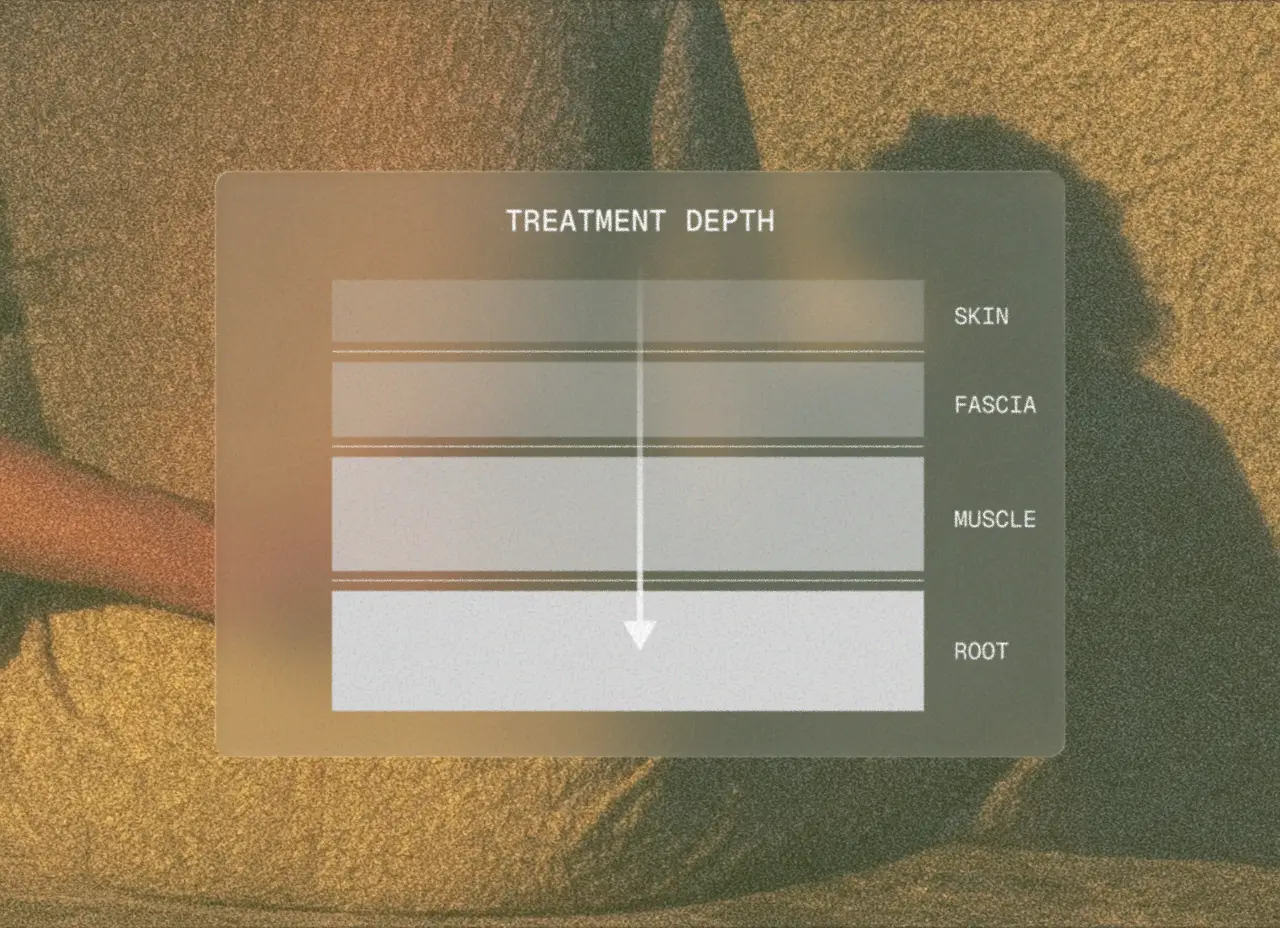
When a muscle is shortened, it's essentially stuck in a contracted state. Over time, the fascia — the connective tissue surrounding the muscle — adapts to this shortened position, making it even harder for the muscle to return to its natural length.
The RX2600's sustained pressure overcomes this adaptation. The combination of static pressure, heat, and vibration works on multiple levels simultaneously. The pressure physically elongates the muscle fibers. The heat increases tissue pliability, making the fibers more responsive. The vibration calms the nervous system, reducing the body's protective guarding response that normally resists deep pressure.
The result is structural change. The muscle doesn't just feel looser temporarily. It is measurably longer. And because the change is structural, it persists between sessions and compounds over time.
Precision That Compounds Over Time
One of the most common things patients tell us is that robotic therapy results feel different from anything they've experienced before. Not just the intensity of the treatment, but the durability of the results.
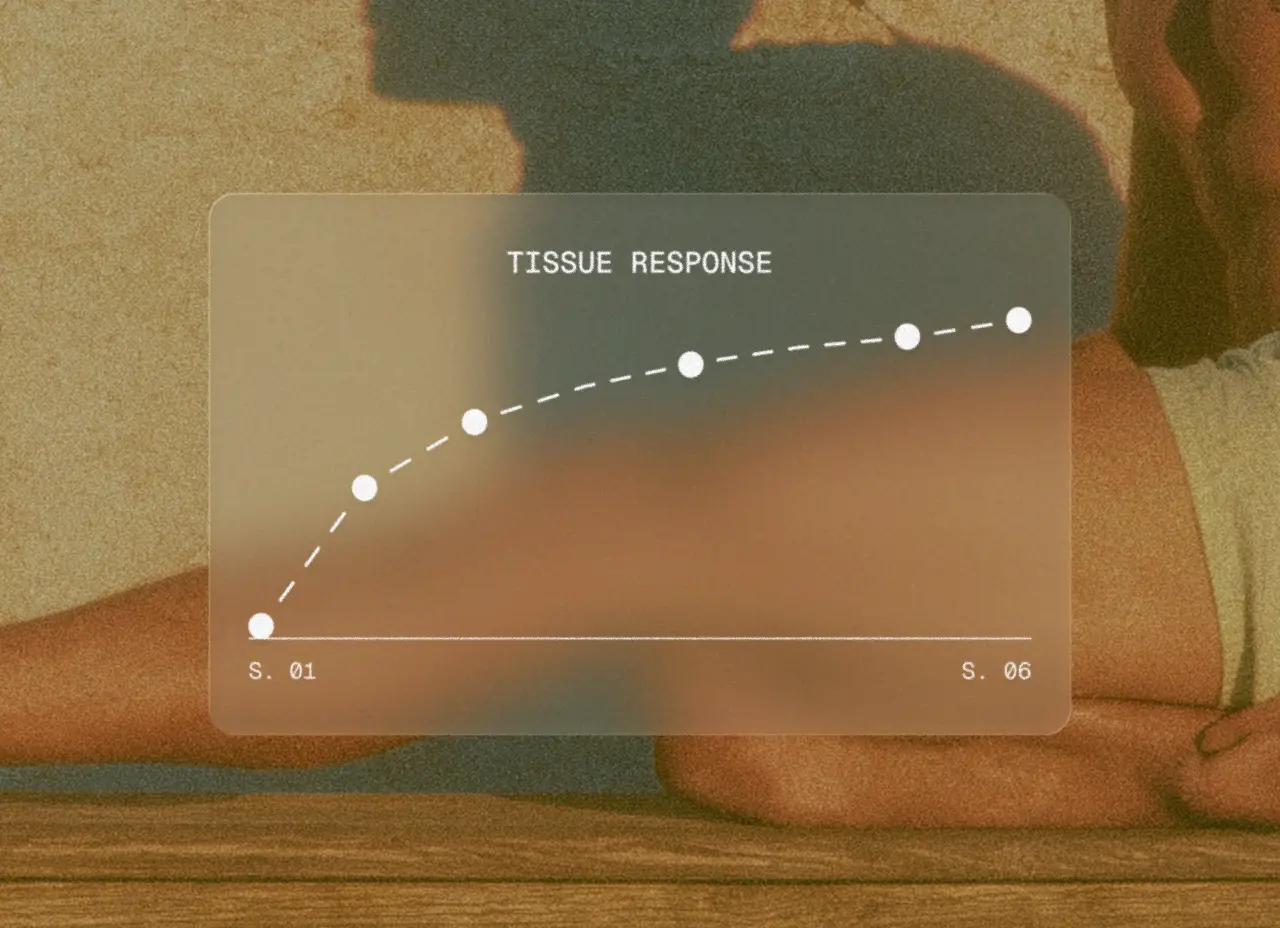
With manual therapy, relief typically fades within hours or days because the treatment rarely produces structural change in the tissue. With the RX2600, each session builds on the last. The muscle tissue that was lengthened in session one stays longer, and session two pushes it further. Progress compounds.
We track this progression clinically. Range of motion measurements increase. Grip strength improves. Pain scores drop — and stay down. The numbers tell the story, and you can see the trajectory from your very first session.