Conditions
Desk Job, Real Pain: Treating Neck and Shoulder Tension
Hours at a desk create real structural changes in your muscles. Here's why your neck and shoulders hurt, why stretching isn't enough, and how robotic therapy provides lasting relief.

Your Desk Is Reshaping Your Muscles
If you work at a desk for eight or more hours a day, your body is adapting to that position in ways you can feel but might not fully understand. The muscles across the front of your chest and shoulders shorten as your shoulders round forward. The muscles in the back of your neck shorten as your head drifts forward toward the screen. The upper trapezius muscles become chronically overactivated, trying to hold your head in a position your spine wasn't designed to maintain.
These aren't temporary tension patterns. Over months and years, the muscle tissue physically shortens and the surrounding fascia adapts to the shortened state. That's why stretching at your desk provides only a few minutes of relief. You're momentarily lengthening tissue that immediately returns to its adapted, shortened position.
The Chain Reaction: From Tight Shoulders to Tension Headaches
Neck and shoulder tension rarely stays contained. Shortened muscles in the upper trapezius and suboccipital region compress nerves and restrict blood flow at the base of the skull. The result is tension headaches — that band of pressure across the forehead or behind the eyes that shows up reliably by mid-afternoon.
Meanwhile, the rounded shoulder posture compresses the thoracic outlet, which can cause tingling or numbness in the hands and fingers. Restricted cervical rotation makes it painful to check your blind spot while driving. Sleep quality deteriorates because you can't find a comfortable position for your neck.
The pattern is progressive. What starts as occasional stiffness becomes daily discomfort, then chronic pain with secondary symptoms. The longer the muscles remain shortened, the more the compensatory patterns entrench.
Why the RX2600 Works for Desk-Related Pain
The RX2600 is particularly effective for desk-related neck and shoulder tension because it addresses the structural shortening that other treatments can't reach.
Your therapist identifies which muscles have shortened — typically the pectoralis minor, upper trapezius, levator scapulae, and suboccipital muscles — and programs the robot to deliver sustained pressure at the exact intensity needed to lengthen them. The heat component increases tissue pliability, and the vibration calms the nervous system's protective guarding response.
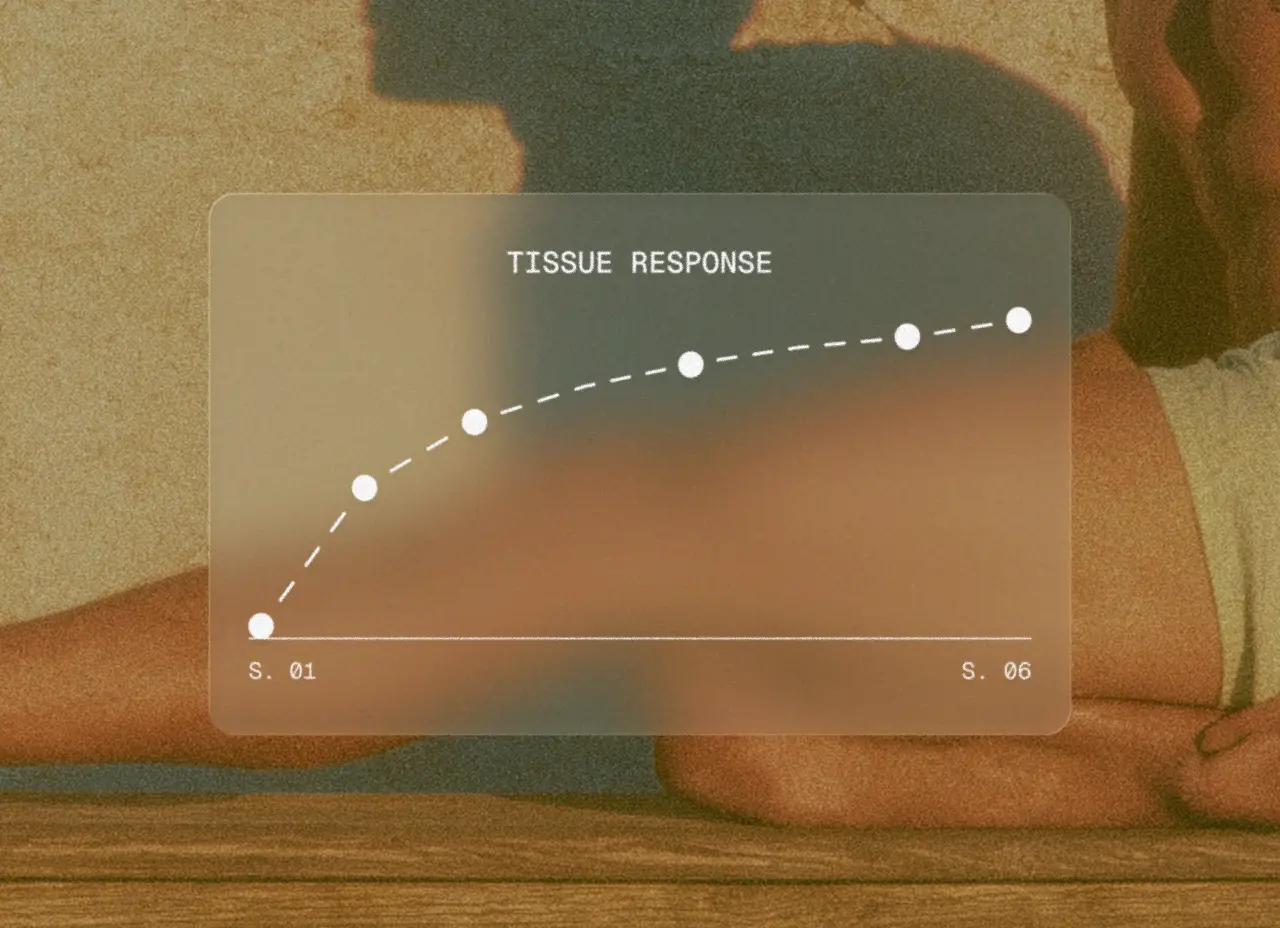
Patients with desk-related pain often see significant improvement in cervical rotation, shoulder mobility, and headache frequency within the first three to five sessions. And because the treatment produces structural change, the results persist between sessions and compound over time.
For patients with particularly stubborn trigger points in the upper trapezius or between the shoulder blades, we often recommend adding Cupping to increase blood flow in the area before the robotic treatment, or Dry Needling to release deep knots that are contributing to the tension pattern.
Building a Sustainable Desk Routine
Robotic therapy addresses the structural damage that years of desk work have caused. But to maintain results long-term, we also recommend simple habits that prevent re-shortening: taking a brief standing break every 45 to 60 minutes, positioning your monitor at eye level, and incorporating posterior chain exercises into your routine.
Many of our patients who work desk jobs complete an initial treatment plan of six to ten sessions to restore their baseline, then schedule monthly maintenance sessions to keep the gains. It's the difference between constantly managing symptoms and actually resolving the problem, then maintaining the fix.